
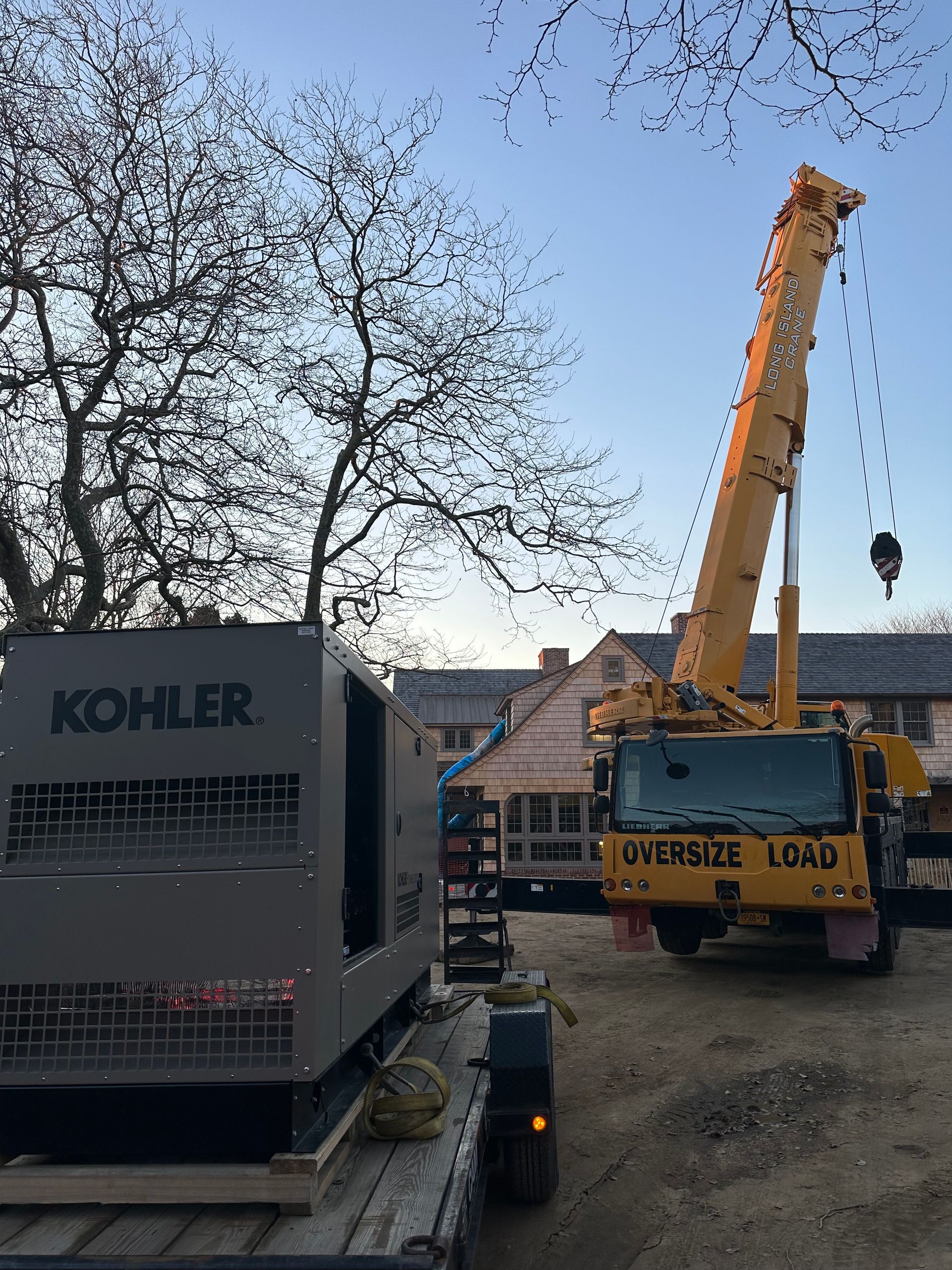
Permanent Power Backup Installed to Code
Generator Installation in East Hampton for properties requiring fully integrated standby systems that start automatically during outages
East Hampton Energy Solutions installs standby generators on residential and commercial properties throughout the East End of Long Island. You are adding a permanent electrical system that connects to your home's panel, fuel supply, and grounding network. This is not a plug-and-play appliance. Installation includes permitting, load center integration, fuel line routing, and transfer switch wiring. When the work is complete, your generator will start on its own within seconds of losing utility power and run your home's essential circuits until the grid comes back online.
The process begins with a site assessment that determines where the unit will sit, how far it must be from windows and air intakes, and what fuel source will feed it. Natural gas requires a tap into your existing line and pressure regulation. Propane requires a tank, regulator, and underground or above-ground line routing. Electrical connections involve installing an automatic transfer switch between your utility meter and main panel, wiring the generator output to the switch, and confirming that the system isolates your home from the grid during operation. East Hampton Energy Solutions handles permitting and inspections to ensure the installation meets local and manufacturer requirements.
Schedule generator installation in East Hampton and surrounding areas to have your system installed by technicians who manage electrical, fuel, and structural integration from start to finish.
What Happens During a Complete Installation
Your generator sits on a composite or concrete pad designed to stay level and support the unit's weight without settling. The pad must allow for drainage and vibration isolation. Once the unit is positioned, the technician runs a fuel line from your gas meter or propane tank, installs a shutoff valve, and pressure-tests the connection. The transfer switch mounts near your electrical panel and receives wiring from both the utility and the generator. This switch monitors incoming voltage and automatically disconnects your home from the grid when it detects an outage, signaling the generator to start.
After the system is energized, you will see the generator run through its startup sequence, confirm transfer switch operation, and power your selected circuits. The unit will perform a weekly self-test, usually lasting twelve minutes, to verify battery charge and engine readiness. You will not need to press a button or flip a switch during an actual outage. The system handles detection, startup, and load transfer without input. East Hampton Energy Solutions tests the installation under load and reviews system operation with you before leaving the site.
Installation timelines depend on permitting, fuel line complexity, and whether your electrical panel requires upgrades to support the transfer switch. Most residential projects are completed in one to two days. The work includes trenching for fuel and electrical lines, mounting the transfer switch, connecting the generator, and coordinating inspections. What is not included is ongoing fuel delivery, which you arrange separately if using propane, or electrical panel upgrades beyond the scope of generator integration.
Common Installation Questions from East End Property Owners
Installation involves coordination between electrical, fuel, and permitting requirements. These questions address the details that affect project timelines and system performance.
What permits are required for generator installation in East Hampton?
You need an electrical permit and, depending on your fuel type and local code, a plumbing or mechanical permit for gas line work. The installer typically pulls permits and schedules inspections as part of the installation process.
How far must the generator be placed from my home?
Code requires standby generators to be set back at least five feet from windows, doors, and fresh air intakes to prevent exhaust from entering the home, though specific distances vary by unit size and local requirements.
When will the system be ready to use after installation?
The generator is operational as soon as it passes final inspection and completes a full-load test, typically on the same day installation finishes, assuming no delays with permitting or utility coordination.
Why does the transfer switch need to be installed by a licensed electrician?
The transfer switch integrates with your main electrical panel and must isolate your home from the utility grid to prevent backfeeding, which can injure utility workers and damage your system. Licensed installation ensures code compliance and protects warranty coverage.
What fuel line work is required for a natural gas generator in East Hampton?
The installer taps into your existing natural gas line, installs a shutoff valve, runs a dedicated line to the generator, and confirms adequate pressure and flow to support the unit's fuel consumption during operation.
East Hampton Energy Solutions manages generator installations across the East End with attention to permitting, fuel integration, and electrical safety. Contact the team to discuss your property's site conditions and schedule an installation that meets manufacturer and local code standards.